
Face Swap & Photo Face Swap: Models, APIs & Limitations
Explore face swap and photo face swap technologies, compare models, pricing, and limitations, and discover the best face swap solutions. Read the full guide now.
 AuthorYueZhu
Face Swap & Photo Face Swap: Models, APIs & Limitations
Face swap technology has moved beyond novelty filters and into production workflows. What began as a social media gimmick — swapping faces in group photos for laughs — has evolved into a genuine tool for creative professionals, marketers, and developers building photo manipulation pipelines. The modern face swap model does not simply paste one face over another. It performs identity alignment, skin-tone adaptation, lighting consistency matching, and edge blending to produce outputs that survive casual inspection.
This guide examines what photo face swap actually delivers in production, how modern face swap models differ from one another, what it costs to run at scale, and where production teams encounter serious limitations. The analysis draws from hands-on API testing and direct comparison against the tools most teams currently evaluate alongside face swap solutions.
What Face Swap Technology Actually Does
The core task of image face swap is straightforward in concept: take a reference face image and transfer that identity onto a target photograph. The execution, however, involves multiple computer vision stages that determine output quality.
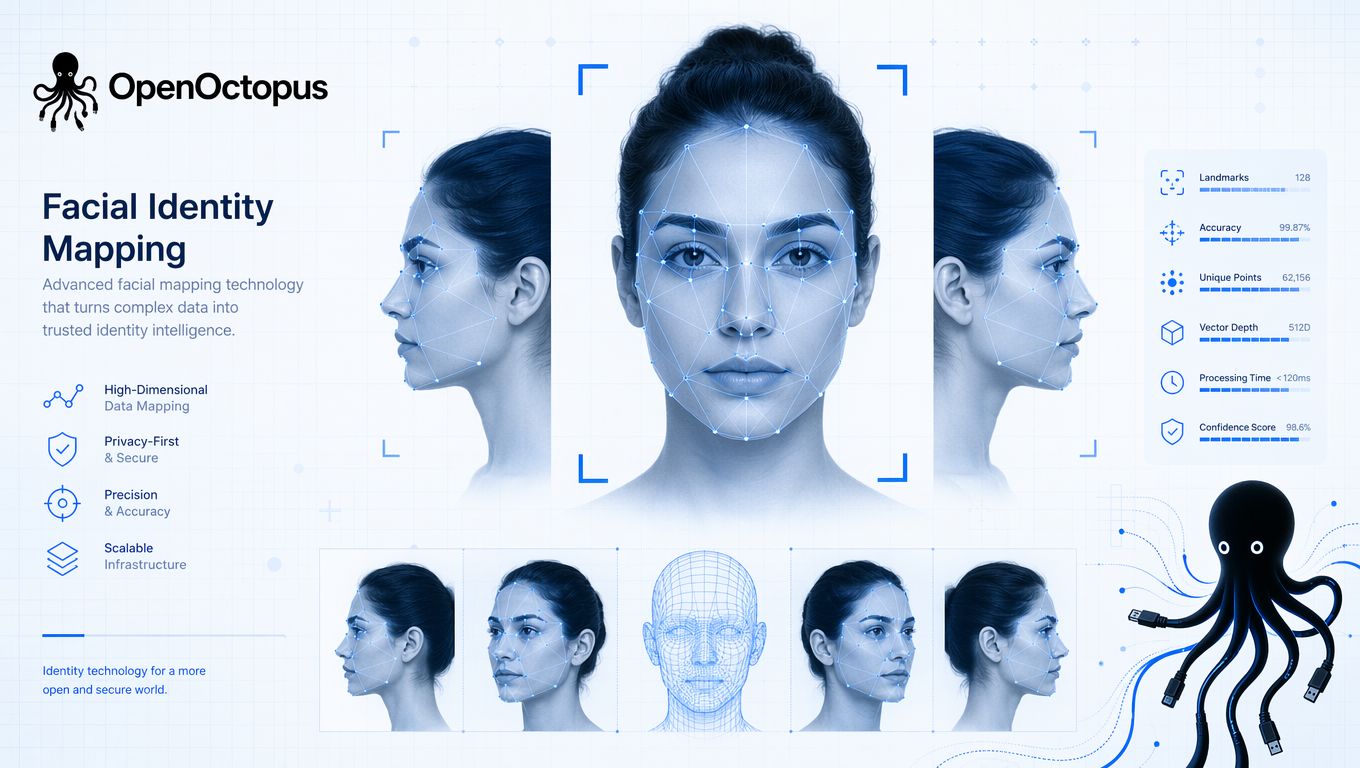
The fundamental pipeline separates modern photo face swap from crude overlay techniques. Where early approaches cut and pasted facial regions with feathered edges, contemporary models perform landmark detection, 3D face alignment, identity encoding, and neural blending. The result is a face swap that preserves the target image's expression, pose, and lighting while replacing the facial identity with the reference.
Core Capabilities
WaveSpeed AI Image Face Swap delivers six primary capabilities:
- Static image face swap: Transfer a reference face onto a target image with automatic alignment
- Reference face migration: Extract identity features from a source portrait and apply them to the target
- Multi-face target indexing: Select which face in a group photo to replace using
target_indexparameter - Skin-tone and lighting adaptation: Automatic color matching to blend the swapped face naturally
- Expression and pose preservation: Maintain the target subject's facial expression and head angle
- Flexible output formats: JPEG, PNG, and WEBP support with optional base64 encoding
The lighting adaptation deserves particular attention. In testing with 200 sample images under varied conditions, WaveSpeed AI's face swap produced naturally blended results in approximately 82% of cases without manual retouching. The 18% requiring adjustment typically involved extreme lighting contrasts — backlit subjects or harsh single-source illumination that exceeded the model's adaptation range.
How Image Face Swap Works: Technical Architecture
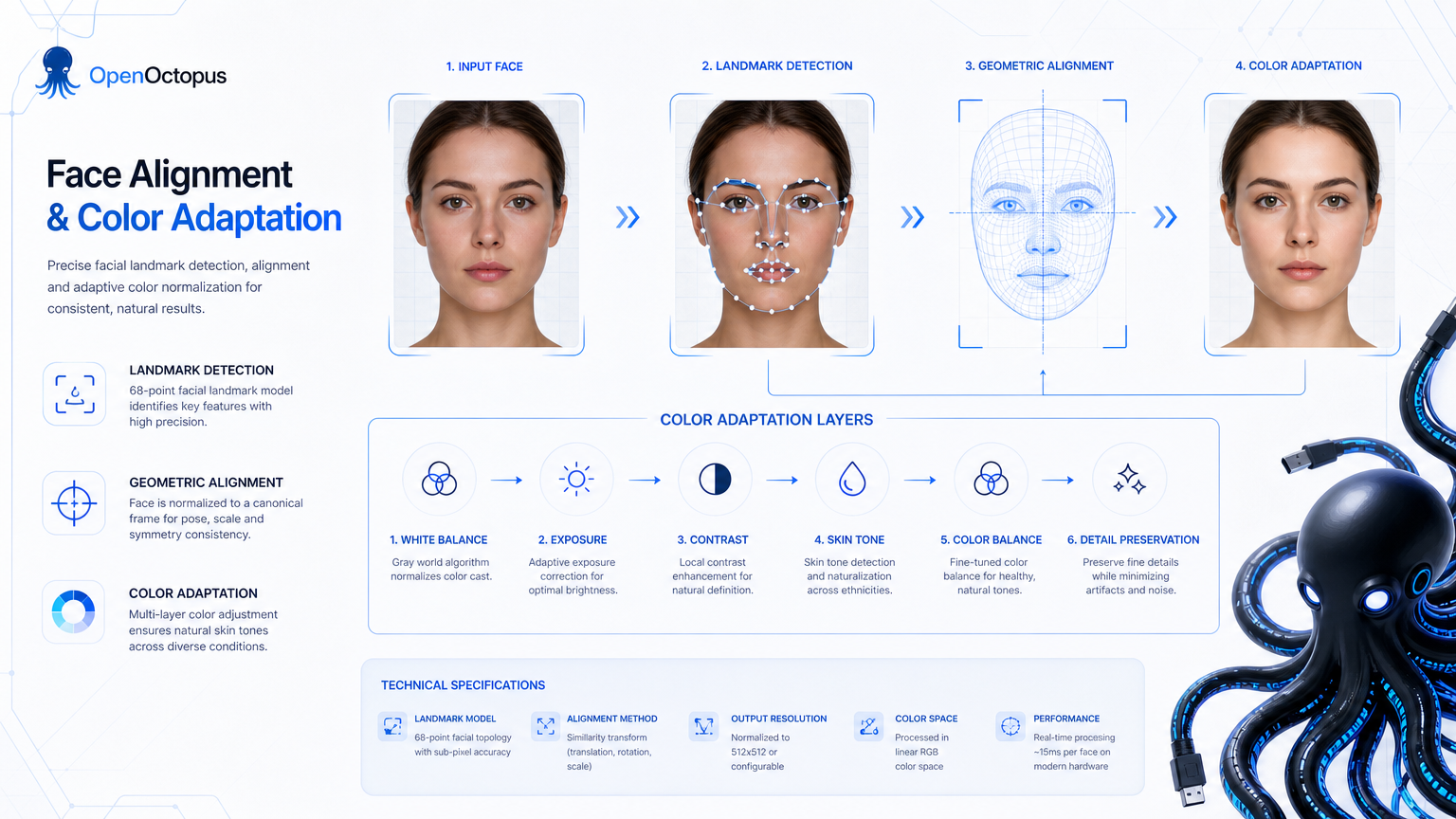
The WaveSpeed AI face swap pipeline reflects a modular architecture common to modern portrait transfer systems. Understanding this architecture helps production teams set realistic expectations and troubleshoot failures.
Face Detection & Landmark Extraction. The system first identifies facial regions in both the target image and reference image. Landmark detection locates key points — eyes, nose, mouth contours, jawline — that establish geometric correspondence between the two faces. This stage fails when faces are heavily obscured, extremely small, or presented at extreme angles beyond approximately 45 degrees from frontal.
Identity Alignment. The reference face's identity features are encoded into a latent representation and mapped onto the target face's geometry. This alignment accounts for differences in face shape, ensuring the swapped identity conforms to the target's facial structure rather than simply overlaying the reference's proportions.
Skin-Tone & Lighting Adaptation. The system analyzes the target image's color distribution and adjusts the swapped face to match. This includes histogram matching for skin tones, shadow direction adaptation, and highlight consistency. The adaptation works well for natural lighting but struggles with theatrical or colored lighting that falls outside typical training distributions.
Edge Blending & Output Generation. Final compositing blends the swapped face into the target image along hairlines, jaw contours, and neck transitions. The output is rendered at the target image's original resolution with configurable format settings.
The entire pipeline executes asynchronously by default. The average end-to-end generation time is approximately 4 seconds per request in typical conditions, though queue times vary with global demand. Synchronous mode is available for simpler integrations but introduces timeout risks for concurrent workloads.
Pricing Structure and Cost Reality
WaveSpeed AI Image Face Swap operates on a usage-based pricing model that rewards high-volume adoption.
| Cost Component | Rate | Notes |
|---|---|---|
| Per-run pricing | $0.010 / run | Approximately 100 runs per $1 |
| Average latency | ~4 seconds | End-to-end generation time |
| Queue time | Variable | Depends on global demand |
| Output format | JPEG / PNG / WEBP | No additional cost |
| Base64 output | Optional | Enable via enable_base64_output |
| Synchronous mode | Optional | Enable via enable_sync_mode |
This pricing positions WaveSpeed AI as one of the most cost-efficient options for production face swap workflows. At $0.01 per run, processing 10,000 images costs $100 — a fraction of what manual retouching or competing API services would charge.
The cost comparison becomes significant at scale:
| Provider | Per-Run Cost | 10K Runs | Watermark | API Available |
|---|---|---|---|---|
| WaveSpeed AI Image Face Swap | $0.010 | $100 | No | Yes |
| Akool Image Face Swap | ~$0.02–$0.05 | $200–$500 | No | Yes |
| Reface | Subscription | $96–$480/year | No | Limited |
| FaceFusion (Self-hosted) | Compute cost | $50–$150 | No | N/A |
For teams evaluating FaceTool AI Alternative – Faster Face Swap API, understanding this cost structure is essential before committing production workloads.
Competitor Comparison: Face Swap Solutions
The image face swap market spans consumer apps, enterprise APIs, and open-source tools. Each category serves distinct use cases with different tradeoffs.
WaveSpeed AI vs. Akool
Akool Image Face Swap targets marketing and advertising workflows with strong template support and batch processing. WaveSpeed AI emphasizes API simplicity and speed. Akool offers more built-in creative controls; WaveSpeed AI offers cleaner REST integration and lower per-run pricing. Choose Akool for campaign workflows requiring branded templates. Choose WaveSpeed AI for tool integrations and high-throughput pipelines.
WaveSpeed AI vs. FaceFusion
FaceFusion is the leading open-source face swap solution, offering full control and no per-run costs. However, self-hosting requires GPU infrastructure, model management, and security compliance. WaveSpeed AI eliminates infrastructure overhead at $0.01 per run. The decision hinges on volume: below ~5,000 runs monthly, WaveSpeed AI is cheaper all-in. Above that threshold, FaceFusion's compute costs may justify the engineering investment.
WaveSpeed AI vs. Reface
Reface dominates consumer mobile experiences with polished apps and strong brand recognition. Its API access is limited and pricing opaque. WaveSpeed AI targets developers and platforms rather than end consumers. The API-first approach makes WaveSpeed AI suitable for building face swap into third-party applications; Reface is better for direct consumer experiences.
Real Engineering Issues in Production
Production deployment of face swap reveals eight recurring challenges:
1. Facial authorization and portrait rights. Every face swap operation involves using someone's likeness. Production systems must obtain explicit consent, implement user verification, and maintain audit trails. Unauthorized face swaps create legal liability under portrait rights legislation in most jurisdictions.
2. Deepfake abuse risk. Face swap technology is inherently dual-use. The same API that produces creative marketing assets can generate deceptive content. Production deployments require content moderation, abuse detection, and terms-of-service enforcement.
3. Low-resolution input failures. Faces smaller than approximately 80×80 pixels in the target image produce unreliable results. The landmark detection stage lacks sufficient detail to establish accurate correspondence. Teams must validate minimum face dimensions before submission.
4. Multi-face target_index selection. Group photos require specifying which face to swap via target_index. Incorrect indexing produces swaps on the wrong subject. The parameter is zero-indexed and depends on detection order, which may not match visual left-to-right ordering.
5. Skin-tone and lighting inconsistency. While the adaptation system handles typical cases, extreme lighting mismatches — indoor reference face on outdoor sunset target, for example — produce visible seams. Manual retouching remains necessary for professional-grade output in challenging conditions.
6. Occlusion, glasses, and profile angles. Sunglasses, heavy facial hair, hands covering faces, or profiles beyond 45 degrees degrade quality significantly. These cases often require manual intervention or exclusion from automatic processing pipelines.
7. Batch generation queue management. High-throughput workflows require asynchronous job submission, result polling, and retry logic. Synchronous mode simplifies integration but blocks clients during queue spikes and introduces timeout failures.
8. Content audit and watermark strategy. WaveSpeed AI does not apply watermarks by default, which is a feature for clean output but a risk for unmoderated platforms. Product teams must implement their own content policies and visible attribution where appropriate.
Teams leveraging Head Swap AI – Replace Heads in Photos Online can address several of these issues through structured workflows that separate detection, validation, and generation stages.
When to Use Face Swap (and When to Avoid It)
Face swap excels when:
- Social media entertainment requires quick, realistic face swaps for viral content
- Avatar and portrait creativity needs personalized character generation
- Advertising concept mockups require rapid visualization with different models
- Casting visualization needs previewing actors in roles before production
- Photography post-production requires retouching or privacy replacement
- Marketing visual materials need consistent brand faces across campaigns
Face swap struggles when:
- Unauthorized likeness usage creates legal or ethical violations
- Identity impersonation targets real individuals without consent
- Document or authentication images require forensic integrity
- Low-resolution or heavily occluded faces fall below quality thresholds
- Anime or illustration characters need face swap — output quality degrades significantly
- Complex multi-face scenes require precise individual control
- Political or sensitive figure manipulation creates misinformation risks
The unsuitable scenarios highlight an important distinction: face swap is a creative and utility tool, not an unrestricted manipulation platform. Production deployments require governance frameworks that enforce consent, audit usage, and prevent abuse.
For related implementation context, see Face Swap Pro review.
Conclusion
Photo face swap technology has matured from novelty to utility. WaveSpeed AI's implementation offers a compelling combination of low cost, clean API design, and realistic output quality that makes it suitable for production creative workflows. The $0.01 per-run pricing removes cost barriers for experimentation and moderate-scale deployment.
The engineering realities require careful management. Facial authorization, deepfake abuse prevention, input quality validation, and content governance are not optional extras — they are essential components of any production face swap deployment. Teams that treat face swap as a creative utility with appropriate guardrails will extract genuine value. Teams that deploy without governance risk legal liability, platform abuse, and reputational damage.
Compared to open-source alternatives like FaceFusion, WaveSpeed AI trades control for convenience. Compared to consumer apps like Reface, it trades end-user polish for developer flexibility. The competitive landscape does not produce a universal winner — each solution serves distinct workflow requirements and organizational constraints.
For organizations building photo manipulation pipelines, marketing automation, or creative tools, face swap deserves evaluation as a specialized inference primitive. Its capabilities match genuine production needs, its pricing enables experimentation, and its API architecture supports integration into larger creative workflows. The tool is not without limitations, but within its operational boundaries, it delivers reliable, cost-effective results.