FaceTool AI Alternative

Faster Face Swap API with Lower Costs & No Watermarks

Developers building face swap features face a predictable set of frustrations. Unstable APIs, unpredictable pricing, watermarked outputs, and slow queues turn simple integration into a reliability nightmare. If you are evaluating a facetool-ai alternative that delivers production-grade performance without operational friction, the landscape has shifted in 2026.

Clean blue facial identity alignment visualization with portrait transfer pathways, professional AI infrastructure aesthetic

Performance at a glance

$0.010
Per run with transparent pricing
~4s
Average end-to-end generation time
100
Runs per dollar at standard pricing

What developers need from a facetool-ai alternative

1

Watermark-free output

Deliver clean images to end users without branding artifacts that cheapen the product experience. A serious facetool-ai alternative must respect your brand identity.

2

Predictable pricing

Per-run billing at $0.010 per request eliminates the surprise invoices that usage-based models with hidden tiers produce.

3

Fast synchronous mode

Support both async task queues for batch processing and synchronous responses for real-time interactive applications.

4

Base64 output support

Receive generated images directly in API responses without additional fetch operations, simplifying serverless and edge deployments.

5

Multi-face target indexing

Specify exactly which face in a group photo receives the swap, enabling precise control without manual preprocessing.

6

REST simplicity

Standard HTTP endpoints with JSON payloads that any engineering team can integrate without specialized SDK knowledge.

7

No model management

Stop worrying about version updates, deprecation schedules, or capacity planning. The face swap api handles inference infrastructure entirely.

8

Format flexibility

Output JPEG, PNG, or WEBP according to your downstream pipeline requirements without conversion overhead.

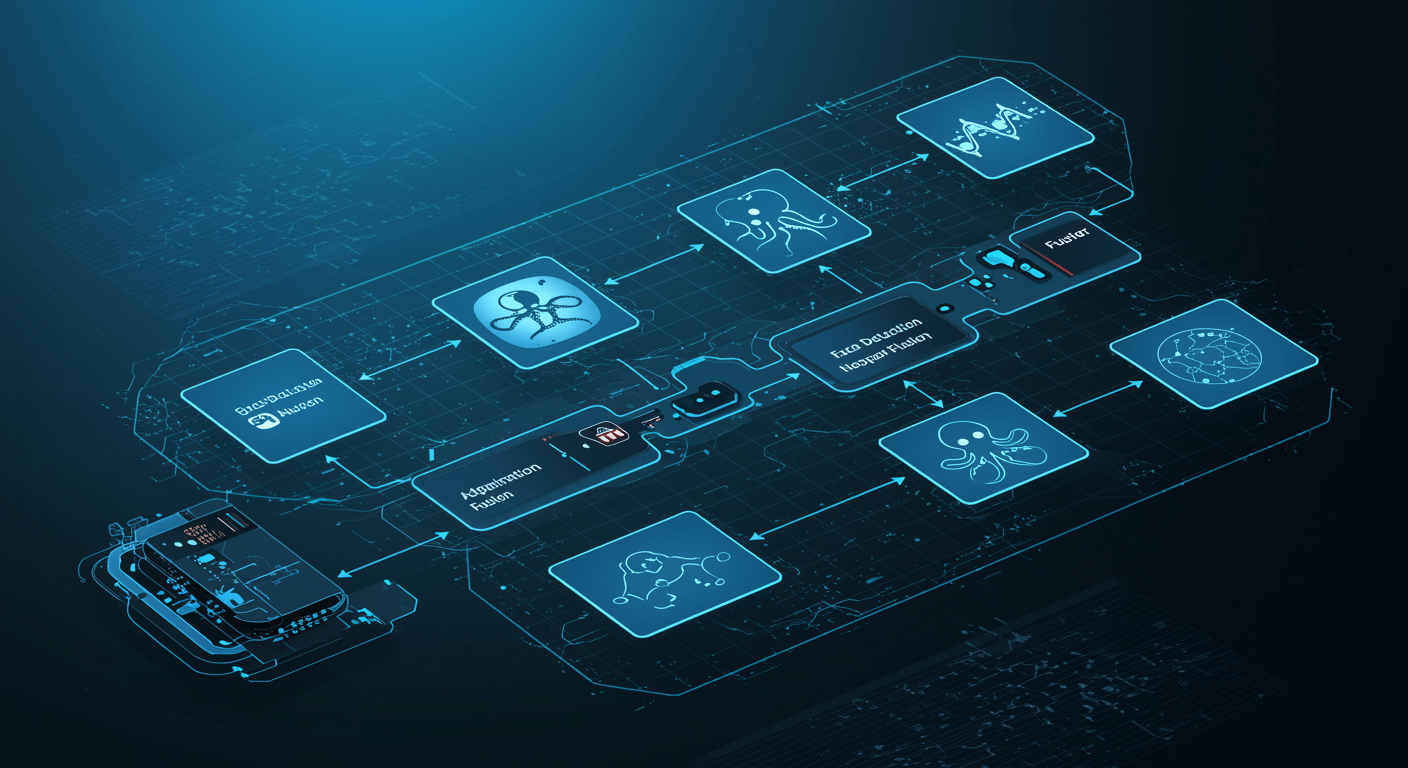
Structured blue pipeline diagram showing face detection, alignment, adaptation, and fusion modules in sequence

How WaveSpeed AI Image Face Swap works

According to WaveSpeed AI Image Face Swap | AI Portrait Transfer API, the model combines five technical modules into a single inference pipeline: face detection, identity alignment, contour matching, skin-tone adaptation, and lighting consistency blending.

The process begins when your app submits two images through the face swap api. The first image contains the target scene. The second provides the reference face. The system detects landmarks, aligns identity vectors, matches contours, adapts skin tone to ambient lighting, and blends edges for a natural result.

Step 1: Landmark detection. The system identifies 68+ facial landmarks, establishing spatial correspondence.

Step 2: Face alignment. Identity vectors align in shared latent space, ensuring recognizable identity while adopting target pose.

Step 3: Skin-tone adaptation. The reference face color profile adjusts to match target lighting, eliminating the pasted-on appearance of lower-quality facetool-ai outputs.

Step 4: Edge fusion. A feathered alpha blend merges the transferred face along natural contours.

This architecture completes in approximately four seconds per request. Teams evaluating a facetool-ai alternative should benchmark against their current solution.

facetool-ai Pricing vs. Transparent Face Swap API Alternatives

When evaluating a facetool-ai alternative, understanding total cost of ownership prevents budget overruns.

ProviderPricing ModelPer-Run CostWatermarkSync Mode
WaveSpeed AIPer-run flat$0.010NoneYes
FaceTool AITiered creditsVariableYes (free tier)Limited
AkoolSubscription + overage$0.02–$0.05NoneYes
PiAPIPer-request$0.015NoneYes
RefaceEnterprise onlyCustomNoneNo

At $0.010 per run, WaveSpeed AI delivers predictable costs for high-volume applications. Ten thousand monthly face swaps cost exactly $100. Tiered credit systems often charge 40–60% more after overage penalties.

The synchronous mode deserves particular attention for interactive applications. While async queues work for batch processing, real-time tools like photo editors require immediate responses. According to REST API – WaveSpeedAI, enabling sync mode returns the generated image in the same HTTP response, eliminating the complexity of result polling and webhook management.

Model costs at three tiers:

Monthly VolumeWaveSpeed CostTypical Tiered CostAnnual Savings
1,000 runs$10$15–$25$60–$180
10,000 runs$100$140–$200$480–$1,200
100,000 runs$1,000$1,500–$2,500$6,000–$18,000

These savings fund product development rather than inflating infrastructure budgets.

Ready to reduce your face swap api costs? Get your API key and start integrating in minutes.

Clean geometric pricing comparison bars with blue gradient accents, transparent API cost visualization

AI Portrait Transfer in Practice: Integration Patterns

The theoretical capabilities of an image face swap api matter less than practical integration into existing product workflows. WaveSpeed AI supports multiple patterns that accommodate different architecture decisions.

Direct REST integration. Standard HTTP endpoints accept multipart form data. According to Get Started with API – WaveSpeedAI, authentication requires a single API key. No OAuth, no token refresh, no session management.

Python SDK workflow. Install via pip install wavespeed and submit tasks with minimal code. The SDK handles serialization, retry, and parsing.

JavaScript / Node.js integration. The npm package wavespeed supports browser and server environments. Frontend teams can build drag-and-drop widgets.

Async batch processing. The async task model accepts jobs and returns a request_id. Poll GET /api/v3/predictions/{request_id}/result until completion.

Base64 inline delivery. Enable enable_base64_output to receive the generated image as a data URI. This eliminates follow-up fetches and simplifies serverless deployment.

The flexibility to choose distinguishes mature face swap api providers from narrow point solutions.

Blue integration flowchart showing REST, SDK, async, and base64 delivery paths to production

Comparing facetool-ai vs. WaveSpeed Face Swap Online Options

The face swap online market has fragmented into distinct product categories. Understanding where each solution fits helps teams make informed adoption decisions.

DimensionWaveSpeed AIFaceTool AIAkoolPiAPIReface
Pricing clarityExcellentModerateModerateGoodOpaque
Watermark policyNoneFree tier onlyNoneNoneNone
Sync modeYesLimitedYesYesNo
Base64 outputYesNoNoYesNo
Average latency~4s6–12s4–8s5–10sEnterprise
REST simplicityExcellentModerateGoodGoodCustom
Multi-face controlYesBasicYesYesYes
Output formatsJPEG/PNG/WEBPJPEG/PNGJPEG/PNGJPEG/PNGCustom

The facetool-ai comparison resolves around three concerns: output quality, API stability, and cost scaling. Flat per-run pricing eliminates surprise overage invoices common in credit-based facetool-ai plans.

For teams currently using facetool-ai, migration involves minimal code changes. Primary adjustments involve auth headers, response parsing, and webhook removal when switching to sync mode.

Teams evaluating ai portrait transfer should review Face Swap & Photo Face Swap: Models, APIs & Limitations for security and compliance guidance.

Clean comparison matrix with blue gradient accents, professional evaluation aesthetic

facetool-ai Technical Architecture vs. WaveSpeed Identity Alignment

WaveSpeed AI Image Face Swap builds upon a Face Identity Alignment & Lighting Consistency Module that addresses the specific failure modes that make synthetic portraits look fake. According to Best Free AI Face Swapper in 2026 | WaveSpeed Blog, four technical characteristics directly impact output quality.

Lighting consistency adaptation. The reference face color temperature, exposure, and shadow direction match the target scene. Without this step, a warm indoor portrait appears pasted onto a daylight beach photo. Adaptation operates in LAB color space, adjusting luminance to preserve skin texture.

Contour-aware edge fusion. The system traces actual jawline, hairline, and neck contours. A variable-width alpha feather produces seamless transitions.

Expression and pose preservation. The transferred identity adopts target expression and head pose. Pose adaptation operates through 3D morphable model fitting, handling non-frontal angles up to 45 degrees.

Resolution-aware processing. Input images up to 2048×2048 process at full resolution. Downstream scaling preserves fine detail.

Performance characteristics reflect this architectural sophistication:

Pipeline StageTypical DurationResource Intensity
Face detection & landmark extraction200–400msGPU moderate
Identity alignment & pose fitting800–1,200msGPU high
Skin-tone adaptation & lighting match600–1,000msGPU moderate
Edge fusion & final encoding400–800msGPU low
Total end-to-end~4sSingle GPU pass

These latencies assume standard resolution inputs and reasonable queue depth. Peak demand periods may extend queue times before processing begins.

Abstract blue neural network layers showing identity alignment and lighting adaptation pathways

facetool-ai Engineering Realities for Production Teams

Production deployment reveals constraints marketing rarely discusses. WaveSpeed AI operates within boundaries responsible teams must understand.

Authorization and portrait rights. Face swap technology carries legal risks. Production deployments must implement user consent flows, verify authorization, and maintain audit logs. According to Free AI Face Swap — Realistic, Instant & No Watermark – WaveSpeed AI, the platform provides technical capability; legal responsibility remains with the integrator. This applies to any facetool-ai service.

Deepfake abuse prevention. Unrestricted face swap apis enable identity fraud. Production systems must implement content moderation, rate limiting, and abuse detection. Any facetool-ai deployed without safeguards creates liability.

Input quality requirements. Reference faces below 256×256 pixels produce poor identity preservation. Obscured faces often fail detection. Side profiles beyond 60 degrees produce unnatural distortion. No facetool-ai overcomes these hard limits with current architecture.

Multi-face complexity. Group photos require correct target_index selection. Detection ordering follows left-to-right scanning. UI designs should display numbered face overlays. This is a common source of complaints in any facetool-ai interface.

Anime and illustration limits. The model trains on photographic faces. Face swap online with cartoon characters produces unpredictable results. Documentation should set clear expectations for users migrating from a facetool-ai that promised universal compatibility.

Batch queue management. High-volume apps must implement result polling with exponential backoff and retry logic. The async model requires client-side orchestration. This reality is understated in facetool-ai marketing.

Teams evaluating Head Swap AI – Replace Heads in Photos Online can explore an alternative architectural approach that replaces the entire head region rather than performing facial identity transfer.

Structured blue warning network with compliance gates and quality validation nodes

facetool-ai API Access and Unified Infrastructure

For teams building face swap features, WaveSpeed AI provides direct API access with minimal overhead. Standard integration uses two HTTP endpoints. This simplicity is a key reason teams choose it over a complex facetool-ai setup.

Task submission:

POST https://api.wavespeed.ai/api/v3/wavespeed-ai/image-face-swap

Required parameters include target image, reference face image, and optional configuration. The API accepts multipart form data or JSON with base64-encoded images.

Result retrieval:

GET https://api.wavespeed.ai/api/v3/predictions/{request_id}/result

For async submissions, poll until status completes. Response payloads include the generated image URL and processing duration.

OpenOctopus provides unified API access with automatic failover, usage monitoring, and simplified authentication. Teams route requests through a single endpoint with transparent per-request pricing. This simplifies migration from any existing facetool-ai integration.

This unified approach benefits teams evaluating multiple photo face swap providers. Compare WaveSpeed AI against Akool, PiAPI, and alternatives without separate integrations. When a provider degrades, automatic failover routes traffic elsewhere. You are never locked into a single facetool-ai vendor.

Integration PatternImplementation EffortBest For
Direct WaveSpeed APILowSingle-provider applications
Python SDKVery lowData science prototypes
JavaScript SDKVery lowFrontend widgets
OpenOctopus unified proxyLowMulti-provider evaluations
Async batch orchestrationMediumContent production pipelines

Clean blue API endpoint diagram showing task submission and result retrieval flow

Frequently asked questions

A facetool-ai alternative refers to face swap api services that provide faster generation, clearer pricing, watermark-free outputs, or better developer experience than FaceTool AI. WaveSpeed AI Image Face Swap is a leading facetool-ai alternative.

Build face swap features today

Stop wrestling with unstable APIs and surprise invoices. Integrate a face swap api that developers actually enjoy using — fast, predictable, and watermark-free. If you are searching for a reliable facetool-ai alternative, try WaveSpeed AI Image Face Swap through the OpenOctopus playground and ship your portrait transfer feature this week.