AI Code Review Tools
Review, Refactor & Ship Code Faster with DeepCode
Modern engineering teams ship code under constant pressure. Manual code review becomes the bottleneck that slows release cycles. AI code review tools have emerged as critical infrastructure that catches bugs before production and reduces the cognitive load on senior engineers.

Impact at a glance
What modern AI code review tools deliver
Bug detection before merge
Identify logic errors and race conditions that unit tests miss. AI code review tools analyze execution paths rather than syntax alone.
Architectural consistency
Enforce coding patterns without tribal knowledge. DeepCode maps conventions and flags deviations.
Security vulnerability scanning
Detect injection risks and insecure dependencies through semantic analysis.
Performance optimization hints
Spot inefficient algorithms and memory leaks static analyzers overlook.
Refactoring suggestions
Propose multi-file restructuring that preserves functionality while reducing technical debt.
Onboarding acceleration
New engineers learn patterns faster when AI code review tools explain preferred approaches.
Review workload distribution
Junior engineers receive contextual guidance, reducing senior review burden.
Documentation gap detection
Flag functions lacking documentation so knowledge transfer is systematic.

How DeepCode approaches code review
According to DeepSeek API Docs - Integrate with Deep Code, DeepCode functions as a deepcode coding agent operating at the repository level. This architectural distinction fundamentally changes what AI code review tools can accomplish.
Traditional automation checks files against rules. DeepCode ingests project structure, understands cross-file dependencies, and traces how changes affect downstream consumers. When reviewing a pull request modifying a shared utility, DeepCode identifies every call site and flags breaking changes that pass standard linters.
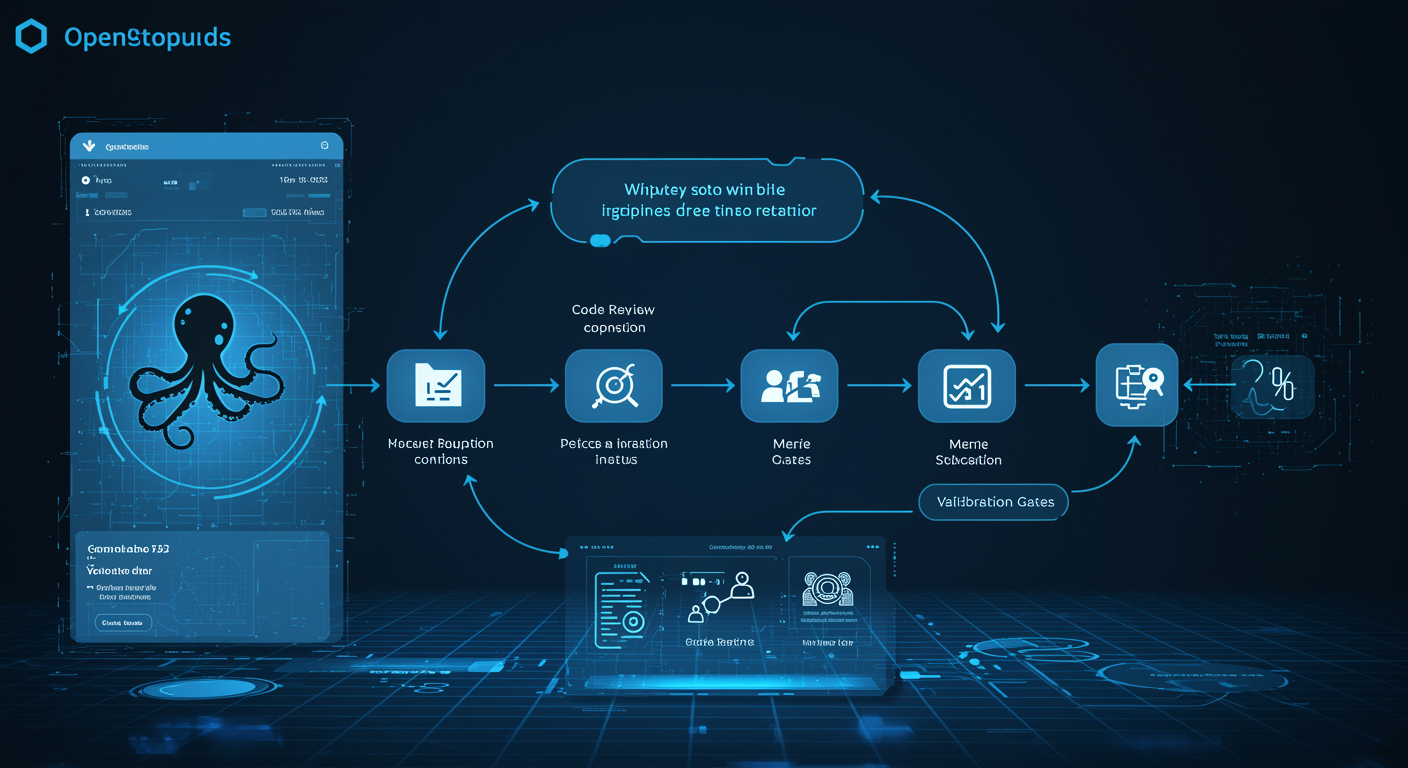
The deepcode ai review workflow follows four phases:
Phase 1: Context ingestion. DeepCode reads modified files, test suites, and dependent modules.
Phase 2: Semantic analysis. The system traces execution paths, evaluates edge cases, and compares changes against conventions.
Phase 3: Issue generation. Findings are categorized by severity and linked to specific lines.
Phase 4: Validation loop. DeepCode generates test cases that verify fixes and runs them to confirm resolution.
This structured approach places DeepCode among the most capable AI code review tools for multi-module applications. Repository-level awareness eliminates integration bugs file-level tools miss.
The Economics of AI Code Review Tools
Choosing the right AI code review tools requires understanding cost structure beyond subscription pricing. DeepCode leverages DeepSeek's API, operating on a transparent token-based model scaling with usage.
| Cost Component | Rate | Typical Review Scenario |
|---|---|---|
| DeepSeek-V4 Flash input | $0.14 / 1M tokens | Standard PR analysis (5–15K tokens) |
| DeepSeek-V4 Flash output | $0.28 / 1M tokens | Review comments |
| DeepSeek-V4 Pro input | $1.61 / 1M tokens | Complex refactoring reviews |
| DeepSeek-V4 Pro output | $3.22 / 1M tokens | Detailed architectural feedback |
A typical review of a medium pull request consumes 20K–50K input and 5K–15K output tokens. At Flash pricing, this costs $0.005–$0.011 per review. For fifty daily pull requests, monthly costs remain under $15.
Comprehensive reviews with test verification consume 100K–200K tokens, costing $0.03–$0.08. Compare this to thirty minutes of senior engineer time, and the return is immediate.
Teams evaluating AI Code Review – Review, Fix & Improve Code with DeepCode should benchmark volume against these estimates.

AI Code Review Tools in Practice: Workflow Integration
The capabilities of AI code review tools matter less than practical integration. DeepCode supports patterns accommodating different team structures.
Pre-commit review. Developers run DeepCode locally before pushing. This shift-left catches issues when cheapest to fix. According to DeepSeek API Docs - Your First API Call, the OpenAI-compatible endpoint enables drop-in integration with CLI tools.
Pull request automation. DeepCode analyzes every PR automatically, posting comments to discussion threads. This eliminates the lag between submission and first human review.
Nightly audit scans. Scheduled scans identify systemic issues across legacy codebases, guiding refactoring priorities.
On-demand architectural review. Before major releases, teams invoke DeepCode for cross-module analysis evaluating API stability.
This flexibility distinguishes mature AI code review tools from narrow plugins.

Comparing AI Code Review Tools: DeepCode vs. Alternatives
The market for AI code review tools has fragmented into distinct approaches. Understanding where DeepCode fits helps teams decide.
| Dimension | DeepCode | Cursor | Claude Code | GitHub Copilot |
|---|---|---|---|---|
| Review scope | Repository-level | File + nearby files | Repository-level | Function-level |
| Context awareness | Cross-module tracing | Editor context | Cross-module tracing | Inline suggestions |
| Agent autonomy | High | Medium | Very high | Low |
| Pricing model | Usage-based (API tokens) | $20/month flat | Usage-based (API) | $10–39/month flat |
| Review speed | Fast | Very fast | Medium | Very fast |
| Multi-file analysis | Strong | Medium | Very strong | Weak |
| IDE integration | CLI / API | Native (VS Code) | CLI / API | Native (multiple) |
| Chinese support | Excellent | Good | Good | Good |
The deepcode vs cursor comparison resolves to workflow preference. Cursor excels at real-time assistance. DeepCode excels at comprehensive review with repository-wide awareness.
The deepcode vs claude code comparison reveals different philosophies. Claude Code emphasizes thorough, explanatory review. DeepCode prioritizes actionable, concise feedback engineers implement quickly.
For teams using GitHub Copilot, DeepCode serves as a complementary layer. Copilot accelerates writing; DeepCode validates architecture. Together they cover the full lifecycle.
Read the complete DeepCode Review: Features, Coding Capabilities, Pricing & Real-World Performance for benchmarks.

Technical Foundation: What Powers DeepCode
DeepCode builds upon the DeepSeek Coder: Let the Code Write Itself model family, inheriting repository-level understanding and multi-language proficiency.
Long-context analysis processes entire files and dependencies without truncation. When reviewing service layer changes, DeepCode retains context from data access, API contracts, and test suites. This catches interface mismatches shorter-context AI code review tools miss.
Multi-language fluency supports polyglot codebases without separate configurations. DeepCode reviews TypeScript frontend, Python backend, Go microservices, and SQL migrations with consistent depth.
Agentic reasoning evaluates whether changes achieve their purpose and whether error handling covers realistic failures. This distinguishes genuine AI code review tools from glorified linters.
Performance characteristics:
| Task Type | Typical Latency | Token Consumption |
|---|---|---|
| Single file review | 3–6 seconds | 5K–15K tokens |
| Multi-file PR analysis | 10–20 seconds | 30K–80K tokens |
| Full repository audit | 45–90 seconds | 200K–500K tokens |
| Architectural review with tests | 60–120 seconds | 300K–1M tokens |
These latencies assume standard conditions. For most teams, comprehensive feedback arrives faster than human reviewer availability.

Engineering Realities: What Teams Should Expect
Production deployment of AI code review tools reveals constraints marketing rarely discusses. DeepCode operates within boundaries teams must understand.
Context limits on massive repositories. Codebases exceeding 500,000 lines may exceed practical context windows. Teams must partition reviews by module.
Multi-file consistency challenges. DeepCode occasionally misses subtle inconsistencies across many files. These compile but create maintenance friction.
Hallucination of non-existent APIs. DeepCode occasionally references non-existent functions in approximately 5–8% of complex reviews. Human verification remains essential.
False positive rates. Aggressive detection generates occasional false positives around style preferences.
Security review boundaries. DeepCode identifies common vulnerabilities but does not replace dedicated security scanning.
Human review remains mandatory. Treating AI code review tools as authoritative enough to merge without validation contradicts best practices. DeepCode accelerates review but does not eliminate judgment.
Teams leveraging AI Code Review – Review, Fix & Improve Code with DeepCode mitigate limitations through structured workflows combining automated analysis with human sign-off.

API Access and Integration for Development Teams
For teams building AI code review tools into products, DeepCode's API provides flexible integration. The OpenAI-compatible endpoint simplifies migration, while native SDKs support deeper customization.
Supported endpoints: Chat Completions, Streaming Responses, Function Calling, and Tool Calling. These enable everything from simple comments to complex agent workflows.
SDK availability: Python SDK, Node.js SDK, REST API, and OpenAI-Compatible SDK. Teams using OpenAI client libraries redirect traffic with minimal changes.
Integration patterns:
| Integration Type | Effort | Best For |
|---|---|---|
| Direct API calls | Low | Internal tools |
| OpenAI-compatible proxy | Very low | Existing integrations |
| Custom SDK wrapper | Medium | Productized services |
| Agent workflow orchestration | High | Autonomous pipelines |
OpenOctopus provides unified API access with automatic failover and transparent pricing. Teams route requests through a single endpoint instead of managing DeepSeek credentials directly.
This unified approach benefits teams evaluating multiple AI code review tools through identical interfaces.

Frequently asked questions
Start shipping better code today
Reduce review cycles, catch bugs before merge, and free senior engineers to build instead of reviewing variable names. Explore DeepCode through the OpenOctopus playground and experience what modern AI code review tools deliver.