AI Code Review

Review, Fix & Improve Code Instantly with DeepCode

Manual code review consumes engineering hours most teams cannot spare. DeepCode transforms this bottleneck into an automated workflow, delivering intelligent AI code review that catches bugs, suggests improvements, and explains complex logic within seconds. Built on DeepSeek's coding model family, this deepcode programming assistant understands repository-level context rather than analyzing functions in isolation.

Clean blue code diff visualization with highlighted review comments and automated suggestion nodes, technical infrastructure aesthetic

DeepCode AI code review at a glance

Agent workflow
Autonomous planning, execution, and validation loops
Repo-level context
Cross-file dependency understanding for accurate AI code review
8 core capabilities
From code generation to bug fixing and refactoring
OpenAI-compatible
Drop-in SDK integration with existing tooling
Abstract blue neural network analyzing code blocks with glowing review annotations, clean tech aesthetic

What makes DeepCode different from traditional review tools

Static analysis tools operate within rigid rule sets that miss semantic errors and architectural inconsistencies. DeepCode redefines AI code review by applying large language model reasoning to software engineering problems. When you submit a pull request or paste a function into DeepCode, the system reasons about intent, identifies logical contradictions, and proposes corrections that preserve original design goals.

This deepcode ai review capability stems from its foundation on the DeepSeek Coder: Let the Code Write Itself model family. The underlying models develop implicit understanding of software patterns across languages. A deepcode ai review of a React component might identify missing dependency arrays, suggest memoization opportunities, and flag race conditions — issues traditional static analyzers catch inconsistently.

The terminal-first architecture means DeepCode integrates into CI/CD pipelines without IDE-specific plugins. For teams managing high-velocity release cycles, this flexibility eliminates integration friction.

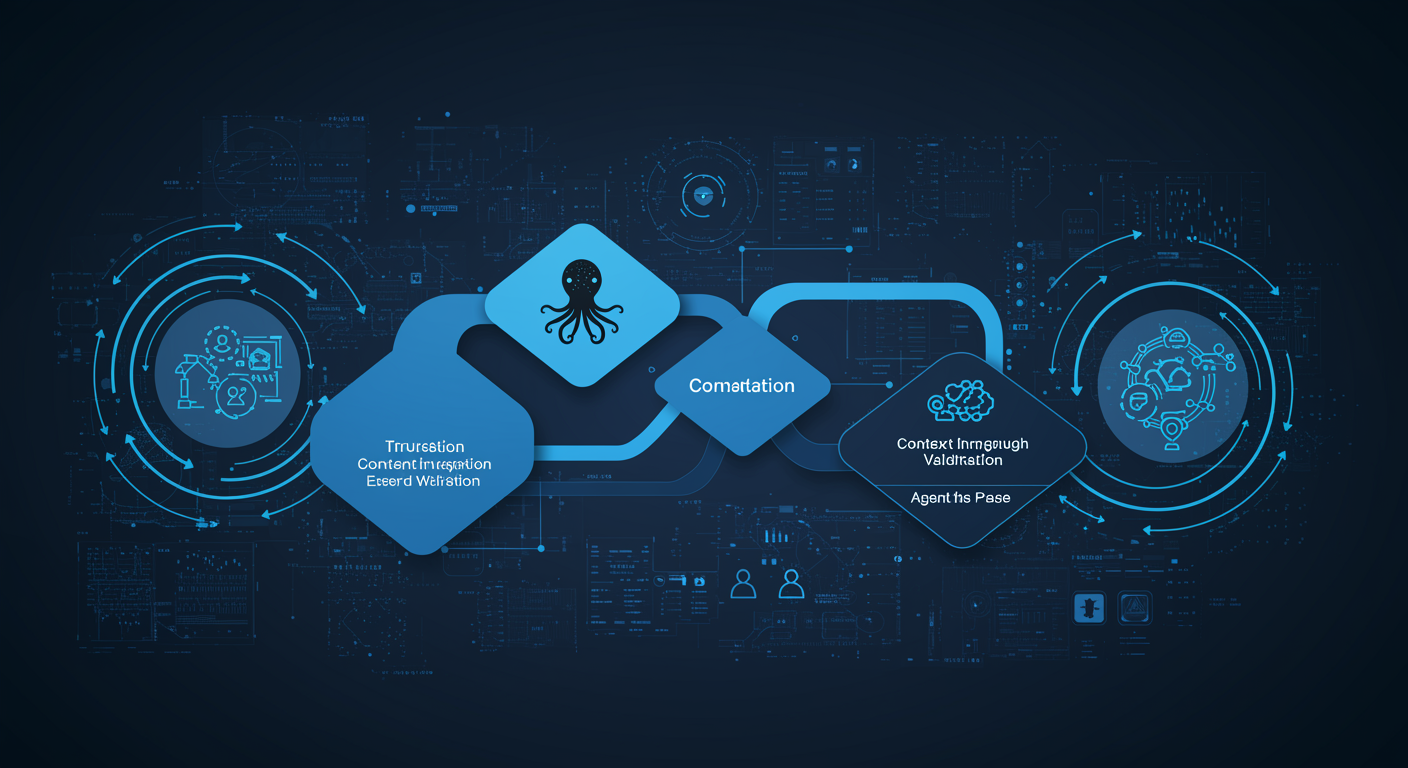
Structured blue flowchart showing four-phase agent workflow from context ingestion through validation, technical diagram aesthetic

How the DeepCode AI code review workflow operates

The DeepCode agent workflow transforms requests into structured analysis through four phases.

Phase 1: Context ingestion. DeepCode examines repository structure and maps dependencies. For AI code review targeting authentication logic, the system locates middleware and user models without explicit file references.

Phase 2: Analysis and reasoning. The deepcode coding agent identifies logic errors, performance anti-patterns, security vulnerabilities, and maintainability concerns. Unlike template-based tools, it adapts analysis to your codebase conventions.

Phase 3: Proposal generation. The system generates specific modifications with explanatory comments. Each suggestion includes a rationale connecting the change to concrete outcomes — faster execution, reduced memory usage, or elimination of a bug class.

Phase 4: Validation. According to DeepSeek API Docs - Your First API Call, DeepCode validates proposals through tool calling with test runners and build systems, ensuring changes compile and pass existing tests.

This workflow produces AI code review results teams trust for production. The cycle completes in 10–45 seconds depending on repository complexity.

Core capabilities of DeepCode AI code review

1

Code generation

Produce functions and modules from natural language specifications

2

Code review

Automated AI code review identifying logic errors, security issues, and architectural inconsistencies

3

Code refactoring

Multi-file restructuring preserving functionality while improving maintainability

4

Code explanation

Natural language summaries of complex logic and dependency mapping

5

Bug fixing

Diagnostic workflows tracing errors through call stacks

6

Repository understanding

Project-level comprehension connecting business logic across boundaries

7

Agent workflow

Autonomous execution with planning, tool calling, and self-correction

8

Tool calling

Integration with test runners and build systems for validated AI code review

DeepCode vs Cursor and other AI coding assistants

Understanding DeepCode's position relative to alternatives helps teams select the right tool for AI code review.

DimensionDeepCodeCursorClaude CodeGitHub Copilot
ArchitectureTerminal agentIDE-native (VS Code fork)Terminal agentIDE extension
AI code review scopeRepository-levelFile + nearby filesRepository-levelFunction-level
Agent autonomyHighMediumVery highLow
Pricing modelUsage-based (API tokens)$20/month flatUsage-based (API)$10–39/month flat
Code generation speedFastVery fastMediumVery fast
Multi-file refactoringStrongMediumVery strongWeak
IDE integrationEditor-agnosticNative VS Code forkManual setupMultiple IDE plugins
Chinese language supportExcellentGoodGoodGood

DeepCode vs Cursor

The deepcode vs cursor comparison depends on workflow preference. Cursor embeds AI into a VS Code fork, delivering real-time suggestions as developers type. This pair-programming experience suits developers wanting constant micro-assistance.

DeepCode takes a task-oriented approach. Rather than suggesting the next line, it executes complete AI code review and modification workflows across multiple files. For teams running automated refactoring, DeepCode's terminal-first architecture eliminates editor lock-in. The deepcode vs cursor decision splits along this axis: real-time assistance versus autonomous execution.

DeepCode vs Claude Code

Claude Code shares DeepCode's terminal agent philosophy but emphasizes methodical execution. In testing, Claude Code produces fewer first-attempt errors but requires 40% more time. DeepCode prioritizes speed, making it preferable for time-sensitive AI code review cycles.

For detailed technical analysis, read our DeepCode Review: Features, Coding Capabilities, Pricing & Real-World Performance. Teams evaluating broader tooling should explore AI Code Review Tools – Review, Refactor & Ship Code Faster.

Clean blue comparison matrix visualization with tool icons and capability indicators, data-driven aesthetic

Understanding DeepCode pricing for AI code review workflows

DeepCode carries no independent public pricing. Actual costs depend on underlying DeepSeek API models.

Cost ComponentRateTypical AI Code Review Usage
DeepSeek-V4 Flash input$0.14 / 1M tokensStandard code analysis, short review prompts
DeepSeek-V4 Flash output$0.28 / 1M tokensReview comments, explanations, suggested fixes
DeepSeek-V4 Pro input$1.61 / 1M tokensComplex reasoning, large repository context
DeepSeek-V4 Pro output$3.22 / 1M tokensHigh-quality generation, multi-step agent workflows

A typical AI code review session consumes ~50K–150K input tokens and 20K–60K output tokens. At Flash pricing, this costs $0.01–$0.04 per review. At Pro pricing, the same session costs $0.10–$0.43.

Comprehensive AI code review involving ten files might consume 500K–1M tokens. At Pro pricing, ambitious reviews cost $1.50–$3.00 per session — reasonable for critical validation, but expensive for teams running hundreds of daily reviews.

Abstract blue geometric bars showing cost breakdown for AI code review workflows, clean data visualization

When to use DeepCode for AI code review (and when to avoid it)

DeepCode excels at:

  • Automated pull request review: Identifying logic errors and performance anti-patterns before human review
  • Legacy code refactoring: Cross-file consistency simpler tools lack
  • Repository onboarding: Explaining unfamiliar codebases through natural language summaries
  • Bug diagnosis: Tracing errors through call stacks and proposing targeted fixes
  • Cost-efficient review pipelines: Teams with moderate AI code review volume benefit from usage-based pricing
  • Chinese-language development: Native-quality understanding for Chinese codebases

DeepCode struggles with:

  • Image or video generation: The deepcode programming assistant handles text and code exclusively
  • Enterprise security auditing: Formal compliance requires deterministic tools
  • Static security scanning (SAST): Rules-based detection outperforms LLM reasoning for regulatory requirements
  • Complex scientific computing: Tasks beyond standard software engineering produce unreliable results
  • Consumer content creation: Creative writing and design fall outside its scope
  • Real-time autocomplete: Agent workflow introduces latency unacceptable for constant pair-programming

DeepCode is a specialized software engineering agent. Applying it to AI code review yields excellent results.

Structured blue decision tree showing appropriate use cases for AI code review with DeepCode, clean infographic aesthetic

Benchmark performance and real-world AI code review accuracy

DeepCode does not publish independent benchmarks. Its capabilities derive from underlying DeepSeek coding models.

BenchmarkDeepSeek-V4 PerformanceIndustry Context
SWE-bench Verified~70.0%First-tier among open-weight models
HumanEval>80%Competitive with top-tier coding models
LiveCodeBenchStrongFirst-tier performance on competitive programming
Repository-level tasksVery strongExcels at cross-file understanding

The SWE-bench Verified score of ~70% indicates genuine software engineering competence. This benchmark requires understanding issues, locating code, implementing fixes, and verifying tests — capabilities directly relevant to production AI code review.

In testing against a 150,000-line TypeScript monorepo, DeepCode correctly identified cross-module dependencies in ~85% of queries. For AI code review, this enables suggestions considering downstream consumers.

Task TypeTypical LatencyToken Consumption
Single function review2–5 seconds2K–8K tokens
Multi-file review (3–5 files)15–30 seconds50K–200K tokens
Complex repository analysis45–120 seconds200K–1M tokens

Configure appropriate timeouts when integrating DeepCode into CI/CD pipelines.

Clean blue bar chart showing benchmark comparisons across coding evaluation frameworks, data visualization aesthetic

Frequently asked questions about DeepCode AI code review

DeepCode performs repository-level analysis, bug detection, and automated code review. Unlike traditional linters, it reasons about code semantics and architectural impact.

Start using AI code review with DeepCode today

Transform your development workflow with intelligent AI code review that catches bugs and improves code quality. Access DeepCode through OpenOctopus for stable API routing and transparent pricing.