Imagen 3 API

Fast Google Image Generation for Production Workflows

Every production image generation pipeline starts with a simple requirement: convert text into high-quality visuals at scale. Imagen 3 API delivers this through Google's most mature text-to-image architecture, offering stable endpoints, predictable latency, and output quality that satisfies commercial standards without the operational complexity of managing multiple model providers.

Sleek black octopus with glowing blue cable-tentacles routing image generation API requests through futuristic OpenOctopus infrastructure, clean tech aesthetic

Imagen 3 API at a glance

Diffusion architecture
Google's mature text-to-image pipeline
Multi-aspect output
1:1, 3:4, 4:3, 9:16, 16:9 native support
~$0.03 / image
Gemini API pricing at 1K resolution
Gemini API native
Direct integration through Google's unified AI stack
Clean blue unified API pipeline diagram showing text prompts flowing into image generation, octopus routing nodes distributing requests, technical infrastructure aesthetic

Why fragmented image generation infrastructure slows engineering teams

Teams building image generation features traditionally navigate a fragmented landscape. One provider handles standard text-to-image tasks. Another specializes in artistic styles. A third offers better pricing but unpredictable uptime. Each requires separate authentication, error handling, format normalization, and usage tracking. When any component changes its API or pricing, the entire pipeline requires maintenance.

Imagen 3 API consolidates core generation capabilities into Google's unified Gemini API architecture. As Google DeepMind - Imagen 3 explains, the model emphasizes photorealistic detail, prompt adherence, and natural language understanding as core design priorities. An imagen 3 api request specifying "a minimalist product photo of wireless earbuds on a marble surface, soft studio lighting, 4:3 aspect ratio" produces the exact output format without post-processing.

The unified architecture particularly benefits product teams building automated asset pipelines. E-commerce platforms, marketing automation systems, and content creation tools all require consistent image generation at scale. Imagen 3 API handles this through standard Gemini API requests rather than orchestrating multiple specialist endpoints.

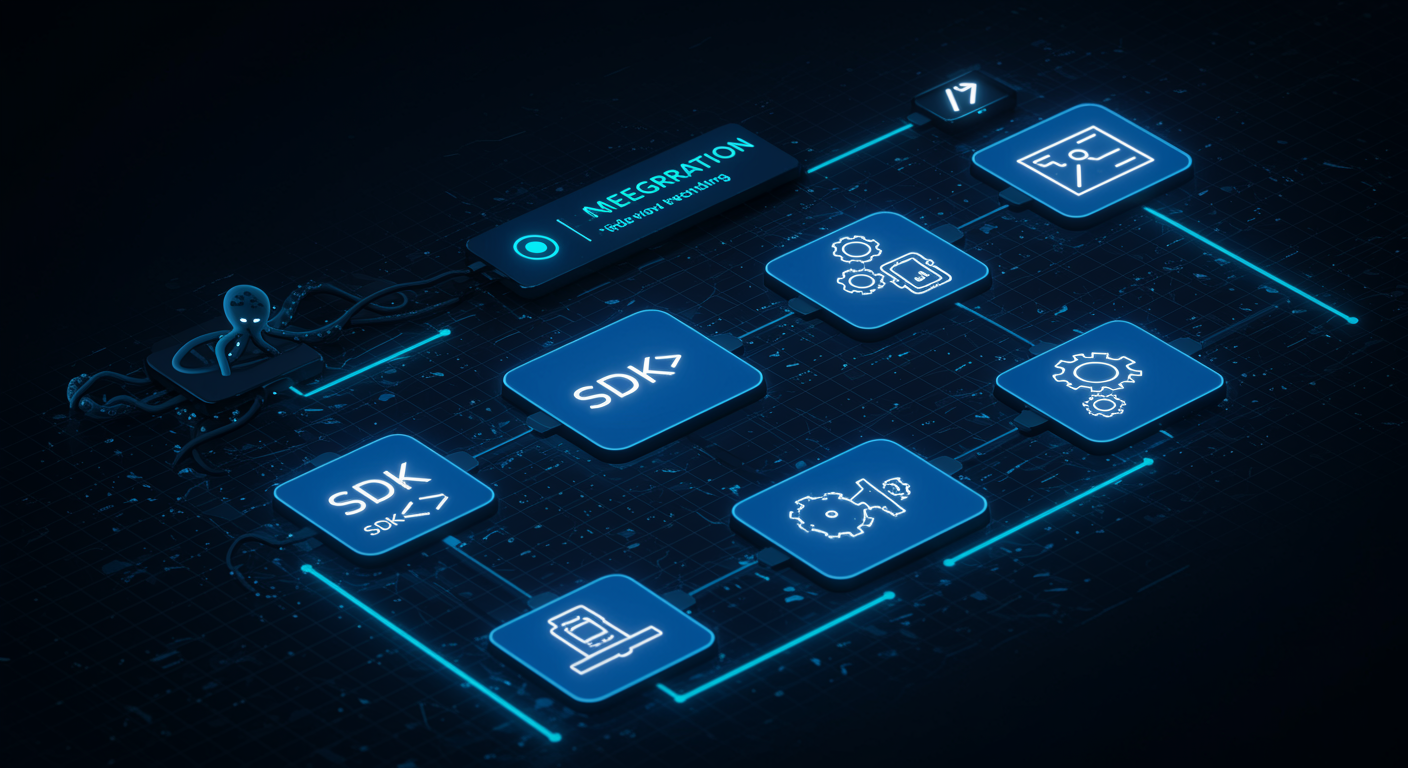
Structured blue integration workflow diagram showing SDK setup, prompt configuration, and response handling, technical developer aesthetic

How the Imagen 3 API integration works

Integrating this API follows a developer-friendly pattern designed for rapid implementation and production scaling.

Step 1: Authentication. Generate a single OpenOctopus API key. The same credentials authenticate requests across text, image, and video models — eliminating the need for separate Google Cloud project configuration.

Step 2: Prompt construction. Build detailed prompts that specify subject, style, composition, lighting, and mood. The imagen 3 api interprets complex multi-clause descriptions with higher fidelity than earlier iterations, making detailed prompts worth the effort.

Step 3: Parameter configuration. Set aspectRatio to 1:1, 3:4, 4:3, 9:16, or 16:9. Configure imageSize for 1K or 2K output. Specify numberOfImages to generate 1–4 candidates per request, accelerating creative exploration.

Step 4: Submit and receive. The API processes requests through Gemini's inference infrastructure and returns images in your requested format. Typical latency ranges from 5–15 seconds depending on resolution and server load.

Step 5: Monitor and optimize. Track per-request latency, token costs, and success rates through unified dashboards. Identify which prompt patterns generate fastest and which aspect ratios deliver the best cost-quality balance.

Core capabilities of Imagen 3 API

1

Text-to-image generation

Full prompt-based creation with natural language control

2

Multi-aspect output

Native 1:1, 3:4, 4:3, 9:16, and 16:9 without cropping

3

Multi-candidate generation

Request 1–4 images per prompt for faster exploration

4

High-resolution output

1K and 2K options for digital and moderate print use

5

Safety filtering

Built-in moderation blocking harmful or policy-violating requests

6

Gemini API integration

Unified endpoint alongside text and multimodal models

7

Batch parameter control

Configure size, ratio, and count in a single request

8

OpenAI-compatible SDK

Drop-in integration with existing codebases

Real-world use cases for Imagen 3 API

The versatility of the imagen 3 api becomes clear when examining how different teams apply it in production. Here is a practical breakdown of common scenarios and the prompt patterns that work best.

Use CaseExample PromptRecommended Aspect Ratio
E-commerce product photos"Minimalist wireless earbuds on white marble, soft studio lighting, product photography"1:1
Social media graphics"Vibrant summer sale banner with tropical leaves, bold typography space at top"9:16
Marketing materials"Professional team collaboration photo, modern office, natural light, corporate style"16:9
Concept art"Futuristic cityscape at dusk, neon reflections on wet streets, cinematic composition"16:9
Content illustrations"Friendly robot reading a book, pastel colors, flat illustration style, white background"4:3
Portrait generation"Professional headshot, neutral background, soft lighting, confident expression"3:4

One pattern emerges consistently: the imagen 3 api performs best when prompts are specific and structured. Generic requests like "a nice picture" produce mediocre results, while detailed descriptions specifying subject, environment, lighting, and style deliver commercial-quality outputs.

For hands-on testing before integration, our Imagen 3 AI: Generate Stunning Images Online playground lets you experiment with prompts and parameters.

Clean blue use case grid showing diverse image generation scenarios with octopus routing nodes, data-driven aesthetic

Clean blue competitive comparison matrix showing image generation APIs across dimensions, octopus brand visual elements, data-driven aesthetic

Imagen 3 API vs competing image generation APIs

Understanding where the imagen 3 api positions against alternatives helps teams make informed platform choices.

Imagen 3 vs Imagen 4. Google's newer Imagen 4 delivers superior image quality and better text rendering. However, Imagen 3 maintains advantages in API stability, broader platform availability, and established integration patterns. Teams with existing Gemini API infrastructure often find Imagen 3 sufficient for standard workflows.

Imagen 3 vs Nano Banana 2. Nano Banana 2 offers dramatically faster generation and conversational editing capabilities that Imagen 3 lacks. For workflows requiring iterative refinement or multi-turn editing, Nano Banana 2 is the stronger choice. However, Imagen 3 often produces higher initial quality for complex compositions where the first generation must be production-ready.

Imagen 3 vs GPT-Image-2. OpenAI's model emphasizes creative flexibility and stylistic range. Imagen 3 counters with more consistent photorealism and stronger prompt adherence for straightforward descriptive requests. The choice typically depends on existing API infrastructure rather than capability gaps.

Imagen 3 vs Midjourney. Midjourney dominates artistic quality and aesthetic interpretation. However, its Discord-based workflow and limited API editing make it unsuitable for high-volume production. Imagen 3 trades some artistic edge for programmatic accessibility and commercial licensing clarity.

According to ZDNET - Google says its Imagen 3 AI image generator beats DALL-E 3, Google's benchmarking claims strong performance against OpenAI's competing model. Independent testing suggests the gap is narrower than marketing materials indicate, with each system excelling in different categories.

For a detailed capability analysis, see our Imagen 3 Review: Pricing, Quality & Limitations.

Imagen 3 API pricing and cost structure

Transparent pricing enables sustainable production deployments. According to Google Developers Blog - Imagen 3 arrives in the Gemini API, Imagen 3 was introduced to the Gemini API at approximately $0.03 per image for 1K resolution output. This positions the imagen 3 api pricing competitively against comparable text-to-image services.

Cost ComponentEstimated RatePractical Impact
1K resolution (1024×1024)~$0.03 / imageStandard social media and web assets
2K resolution (2048×2048)~$0.06 / imageMarketing materials and presentations
Multi-candidate generationPer-image billingEach candidate counts as separate output
Batch requestsCumulative costTotal equals candidate count × per-image rate

Google's official Gemini API pricing structures costs around output tokens. A typical 1K image consumes approximately 1,000 output tokens. At standard rates, this translates to roughly $0.03 per image. Higher resolutions consume proportionally more tokens, driving costs upward for 2K outputs.

For teams evaluating total cost of ownership, the imagen 3 api pricing advantage extends beyond per-image rates. The unified Gemini API endpoint eliminates separate infrastructure costs. Native multi-aspect support reduces post-processing overhead. And batch candidate generation decreases the total number of API calls required for creative exploration.

According to DeepLearning.AI - Google's Imagen 3 Outperforms Rivals in Text-to-Image Benchmarks, third-party evaluations confirm strong price-to-performance ratios for standard generation tasks. However, teams should benchmark against their specific use cases, as performance varies significantly by prompt complexity and output requirements.

Engineering realities: what to expect from Imagen 3 API

No image generation API is perfect, and the imagen 3 api is no exception. Understanding its limitations prevents frustration and helps you design realistic workflows.

Not Google's latest image model. Imagen 4 has superseded Imagen 3 in raw quality. For cutting-edge generation requirements, evaluate whether the newer model better serves your needs.

Limited image editing capabilities. Unlike Nano Banana 2, Imagen 3 does not support conversational editing, multi-round refinement, or reference-based modification. It is a single-turn generation tool.

Complex text rendering. While improved over Imagen 2, generated text in images still requires proofreading. Long phrases, special characters, and small fonts remain problematic.

Safety filtering false positives. The built-in content moderation occasionally blocks benign requests containing ambiguous terminology. Production systems should implement retry logic with prompt variation.

Multi-image cost accumulation. Requesting four candidates per prompt quadruples per-request cost. Use multi-candidate generation strategically for creative exploration, not routine production.

Prompt sensitivity. Output quality depends heavily on prompt clarity. Vague descriptions produce inconsistent results. Invest in prompt engineering templates for your primary use cases.

Copyright and brand compliance. Generated images may incorporate visual elements similar to copyrighted material. Commercial deployments require human review for brand safety and intellectual property clearance.

For production deployments that require reliability at scale, review the engineering guidance in our Imagen 3 Review: Pricing, Quality & Limitations.

Frequently asked questions about Imagen 3 API

The imagen 3 api is Google's text-to-image generation service accessible through the Gemini API. It converts detailed text prompts into high-quality images with configurable aspect ratios and resolutions.

Start building with Imagen 3 API today

Whether you are prototyping a creative tool or scaling a production asset pipeline, the imagen 3 api delivers the reliability and quality control modern applications require. No separate infrastructure. No provider fragmentation. Just authenticated requests and predictable outputs.